Welcome to REAL-TEMP  A RT Product
A RT ProductHow significant is the Long March 5 to China's aerospace industry?
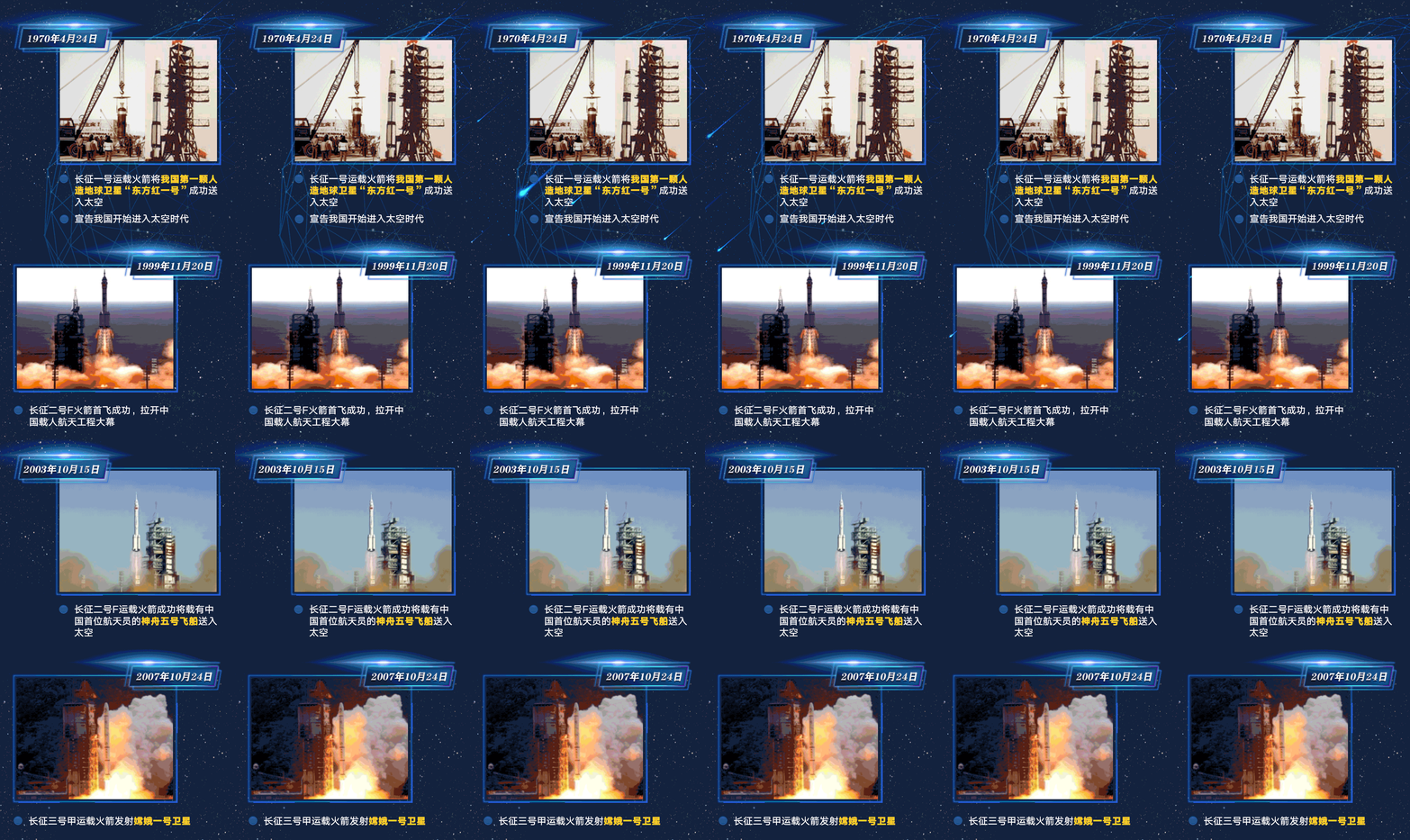
37 years, 7 years, 4 years,100 launches, 200 launches, 300 launches!
On June 1, 2007, 37 years after the maiden flight of the Long March 1 rocket, the Long March 3A rocket successfully sent the Sinosat-3 satellite into orbit, marking the 100th launch of the Long March rocket series. On December 7, 2014, the Long March 4B rocket successfully launched the China-Brazil Earth Resources Satellite, pushing the total launch count of Long March rockets to 200 within over seven years. On March 10, 2019, the Long March 3B rocket lifted off with the ChinaSat 6C satellite, and the series surpassed 300 launches in merely more than four years.
The Long March rocket series has played a pivotal role in the advancement of China’s aerospace cause. Nevertheless, with the rapid development of China's space endeavors, these conventional rockets have gradually fallen short of growing demands.
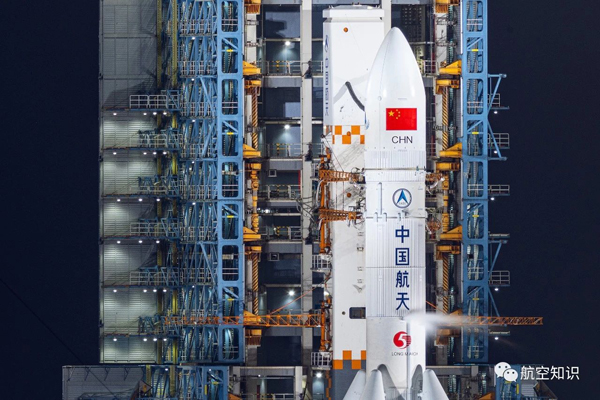
In the near future, China will carry out heavier, larger and more complex space launch missions. For instance, each core module of the planned Tiangong Space Station will weigh around 20 tons, a load far beyond the capability of the Long March 2F rocket, which has a maximum low-Earth orbit payload capacity of 8.6 tons. The brand-new Dongfanghong-5 ultra-large satellite platform has a maximum takeoff weight of up to 9 tons and needs to be delivered to the geostationary orbit above the equator, well exceeding the 5.5-ton payload capacity of the Long March 3B/E rocket. In addition, the Chang'e-5 lunar sample return mission will involve a far heavier payload than the Chang'e-3 and Chang'e-4 missions.
—— Excerpted from Aviation Knowledge, Issue 2, 2020, How Important Is the Long March 5 to China’s Aerospace Industry
Q: Why is it affectionately called "Fat Five"?
A: It adopts a 5-meter-diameter rocket body structure for the first time. With a total length of about 57 meters and a takeoff weight of approximately 870 tons, it is much bulkier than other rockets in the Long March series.
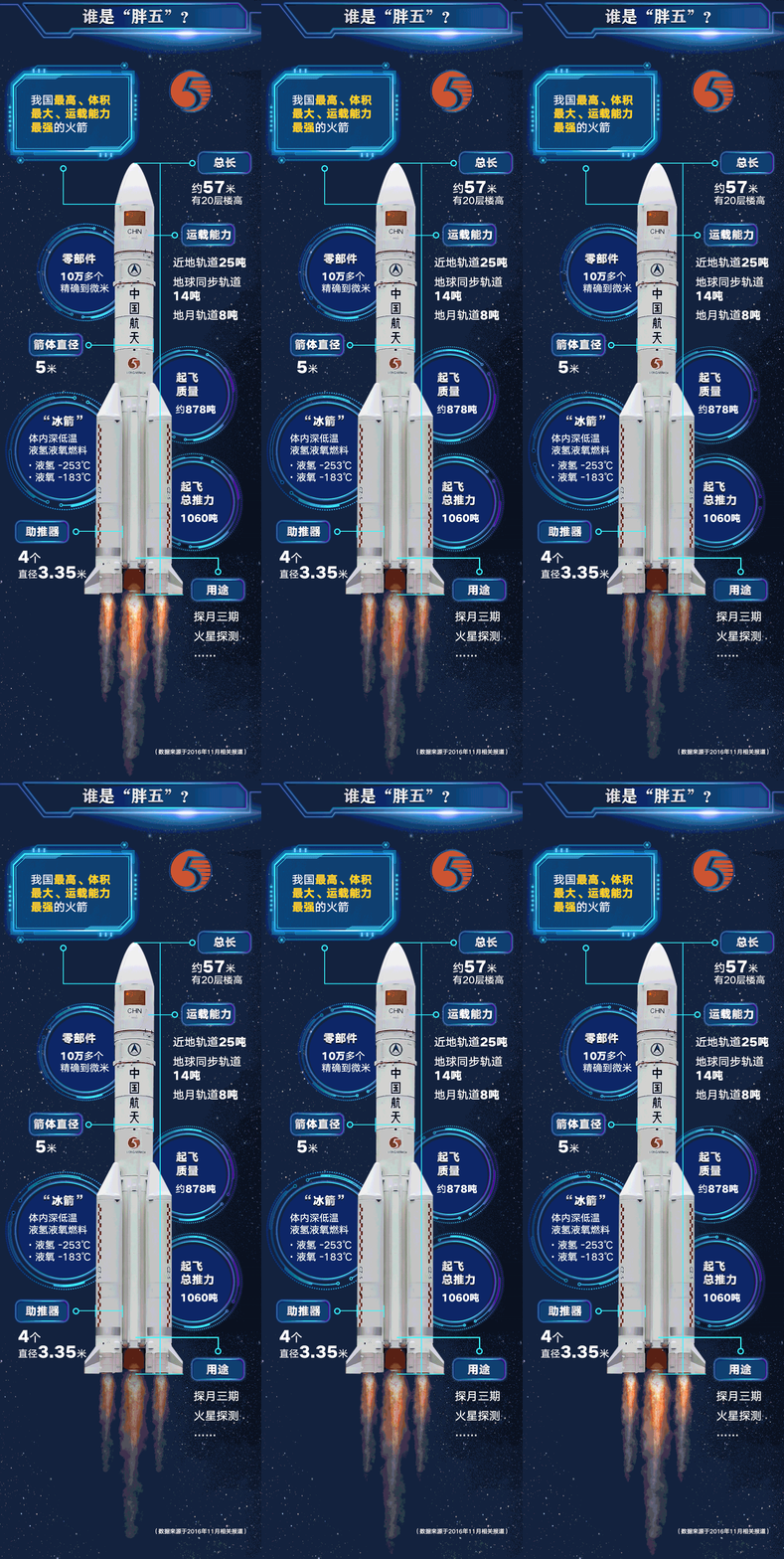
Image Source: People's Daily
Height: 57 metersTakeoff thrust: over 1,000 tons
Still can’t imagine how massive it is?Then take a look at the comparison chart!
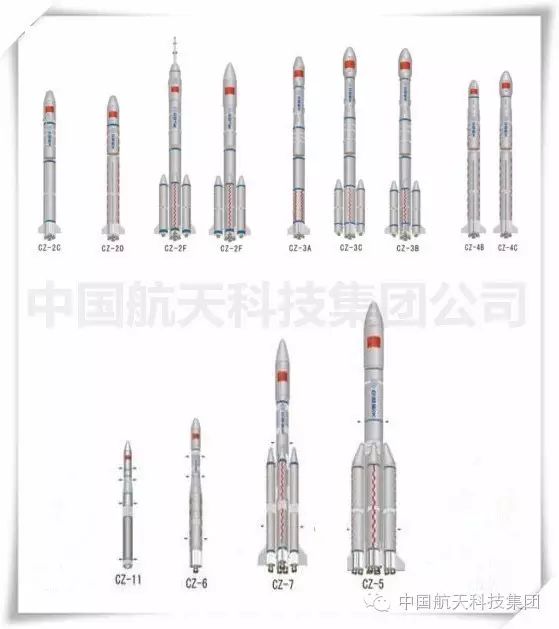
At the same scale, the Long March 5, with a 5-meter core stage plus four 3.35-meter boosters, towers head and shoulders above all other Long March rockets.
Yet despite its stocky appearance, the "Fat Five" is packed with cutting-edge core technologies.
Unlike the chemical fuels used by conventional rockets, the Long March 5 is mostly powered by liquid oxygen at -183°C and liquid hydrogen at -253°C, temperatures close to the extreme limits of cryogenics. This earns it the nickname the Ice Rocket.
Its power core — high-thrust hydrogen-oxygen engines and liquid oxygen-kerosene engines — are all independently developed brand-new models. Burning liquid hydrogen and liquid oxygen, the hydrogen-oxygen engines are eco-friendly and pollution-free, representing a major trend in rocket engine technology. The 120-ton liquid oxygen-kerosene engine delivers the highest single-unit thrust among all domestic rocket engines in China.
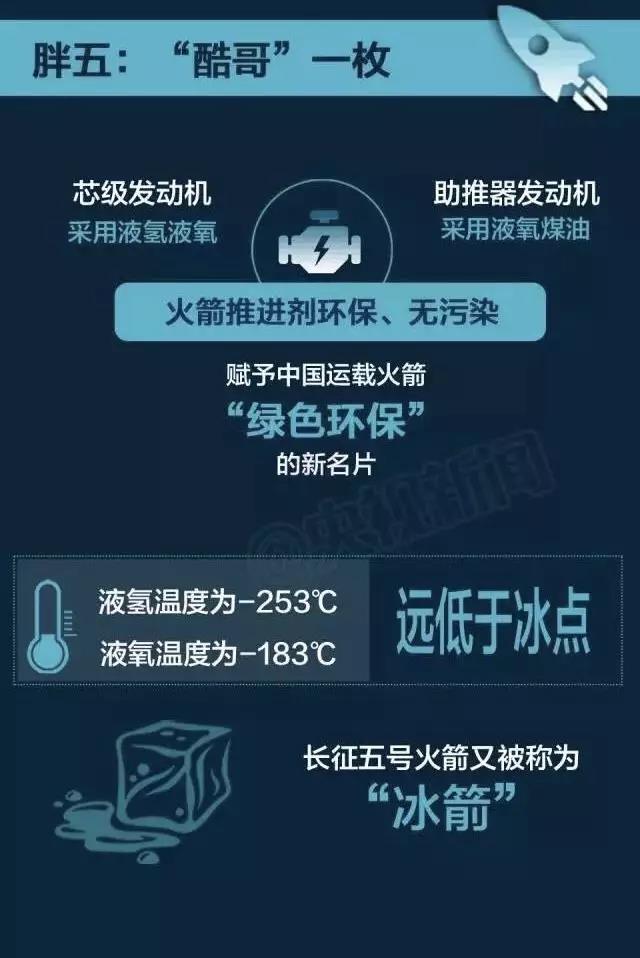
What is the Ice Rocket?
Ultra-low temperature fuel with a boiling point of -252°CZero pollution
The Long March 5 carrier rocket adopts clean propellants including liquid oxygen-kerosene and liquid hydrogen-liquid oxygen. Its first core stage is equipped with two YF-77 hydrogen-oxygen engines, each generating a thrust of 50 tons. The second core stage is fitted with two YF-75D expander cycle hydrogen-oxygen engines, with a single-engine thrust of 9 tons. The boosters are powered by eight YF-100 high-pressure staged combustion liquid oxygen-kerosene engines, each delivering a thrust of 120 tons.
The YF series rocket engines are a family of liquid rocket engines independently developed by China for the Long March carrier rocket fleet. The designation "YF" is derived from the initial Chinese characters of "Liquid" and "Engine".
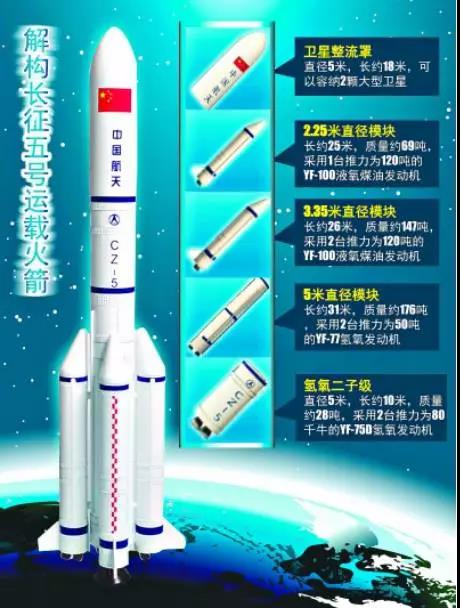
Three-module Structure of the Long March 5
The YF-77 rocket engine is a high-thrust gas generator cycle hydrogen-oxygen engine developed for the core first stage of the Long March 5 launch vehicle.
High energy. The energy released by the reaction of liquid oxygen and liquid hydrogen per unit mass is higher than that of conventional rocket propellants.
Zero pollution. The only product of hydrogen-oxygen combustion is water, and neither propellant contains toxic or harmful substances.
Ultra-low-temperature propellants. Liquid hydrogen has a boiling point of -252℃, and such extreme low temperatures pose great challenges to engine operation.
High thrust. It is the most powerful hydrogen-oxygen rocket engine in China.
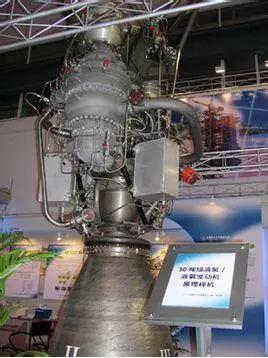
YF-77 Rocket Engine
The YF-75D is China’s third-generation upper-stage liquid hydrogen/liquid oxygen rocket engine. Adopting an expander cycle design, it serves as the core second-stage engine for the Long March 5 series launch vehicles and can also be used as the third-stage engine of the Long March 7 (3-stage GTO variant). Two engines are mounted in parallel via a support frame. Its first-generation and second-generation predecessors are the YF-73 and YF-75 respectively.
Using liquid hydrogen and liquid oxygen as propellants, the YF-75D features a full expander cycle design. It delivers a vacuum thrust of 9 tons and a vacuum specific impulse of 442 seconds, with each engine capable of 4-degree deflection in two directions.
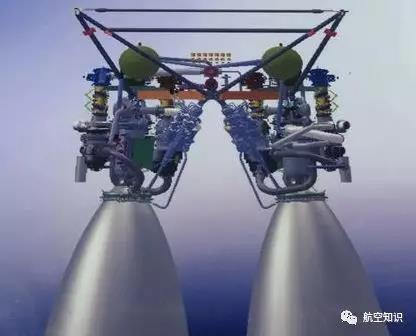
YF-75D
The YF-100 rocket engine is China’s first-generation 120-ton-class high-pressure staged combustion (also known as staged combustion cycle) liquid oxygen‑kerosene rocket engine with independent intellectual property rights.The YF-100 can generate a pressure of up to 500 atmospheres — equivalent to pumping water from the Huangpu River in Shanghai to the Qinghai‑Tibet Plateau, more than 5,000 meters above sea level.
With performance reaching the advanced international level among liquid oxygen‑kerosene engines, the YF-100 boasts numerous advantages:
Pollution-free. Liquid oxygen and kerosene are both eco-friendly fuels and easy to store and transport.
Cost-effective. Its propellant costs 60 percent less than those of conventional engines.
High reliability.
Powerful thrust. Upon its successful development, it became China’s most powerful liquid propellant engine.
Adopts the world’s cutting-edge high-pressure staged combustion cycle system.
Superior performance. Its design parameters, such as maximum pressure, turbine power and propellant flow rate, are several times higher than those of China’s in-service main engines.
Reusability. It can undergo multiple bench tests and remain serviceable for actual launches afterward, avoiding the scrapping of costly engines after every test.
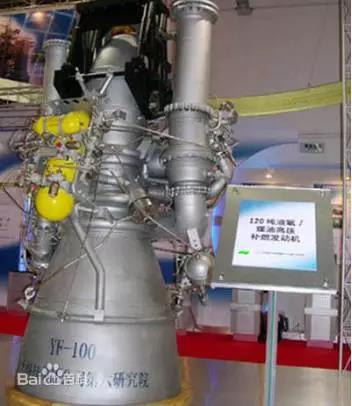
YF-100 Rocket Engine
The 120-ton liquid oxygen-kerosene engine with high thrust and high specific impulse used by the "Fat Five" was once dismissed by foreign experts, who claimed that "even if China could design it, it would never be able to manufacture it". Today, it has become a fundamental power unit shared by various configurations of China’s new-generation launch vehicles. It delivered outstanding performance in the maiden flights of the Long March 6 and Long March 7 rockets.
The greater a rocket’s carrying capacity, the broader the prospects for aerospace exploration.
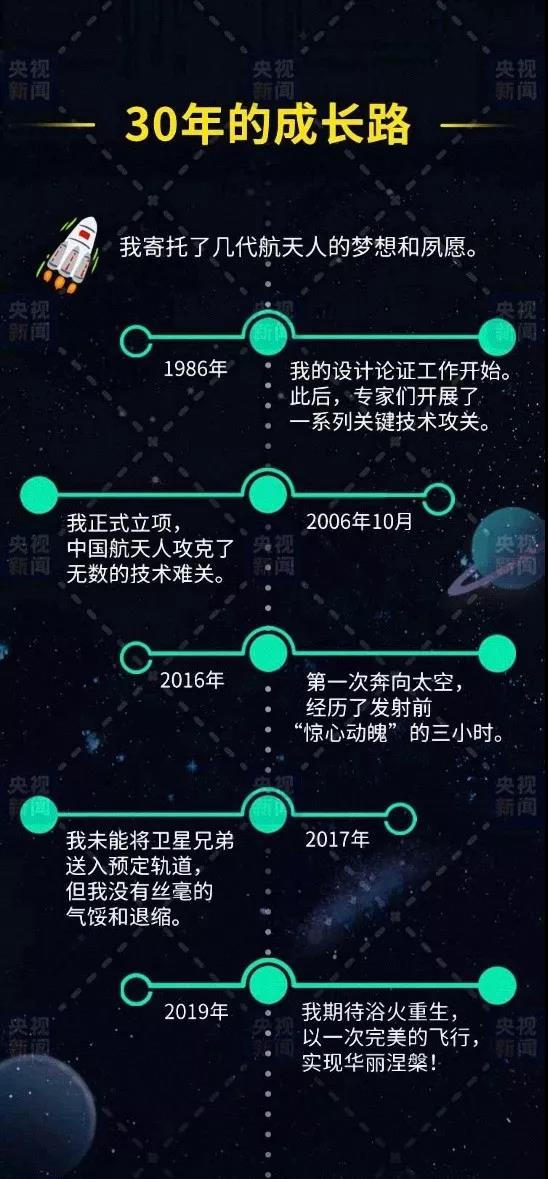
Image Source: CCTV News
The Long March 5 is China’s most powerful new‑generation launch vehicle. With a takeoff thrust of over 1,000 tons and a payload capacity of nearly 25 tons, it has boosted the carrying capacity of China’s active rockets by 2.5 times. In the future, lunar probes, Mars probes and the manned space station will all be launched by this rocket.
In March 1986, to enhance independent innovation capability and pursue strategic, cutting‑edge and forward‑looking development, China began to formulate a high‑technology development plan. That November, the National High‑tech Research and Development Program was officially launched, widely known as the 863 Program.
In 2016, the “Fat Five” headed for space for the first time, enduring three nail‑biting hours before liftoff.
In 2017, its second mission ended in failure as it failed to send the satellite into the scheduled orbit. Countless aerospace researchers were brought to tears at the scene.
Today, the “Fat Five” blasts off successfully.
Into the future, our goal is the stars and the sea.