Welcome to REAL-TEMP  A RT Product
A RT ProductAugust 29, 2022
According to reports from the Associated Press and CNN on August 29, the scheduled launch of the United States’ Artemis I lunar rocket was canceled less than ten minutes before the opening of the launch window. The decision came amid a fuel leak and unresolved technical issues with one of the rocket’s engines. The next launch attempt is tentatively targeted for September 2 at the earliest, pending the progress of relevant tests.
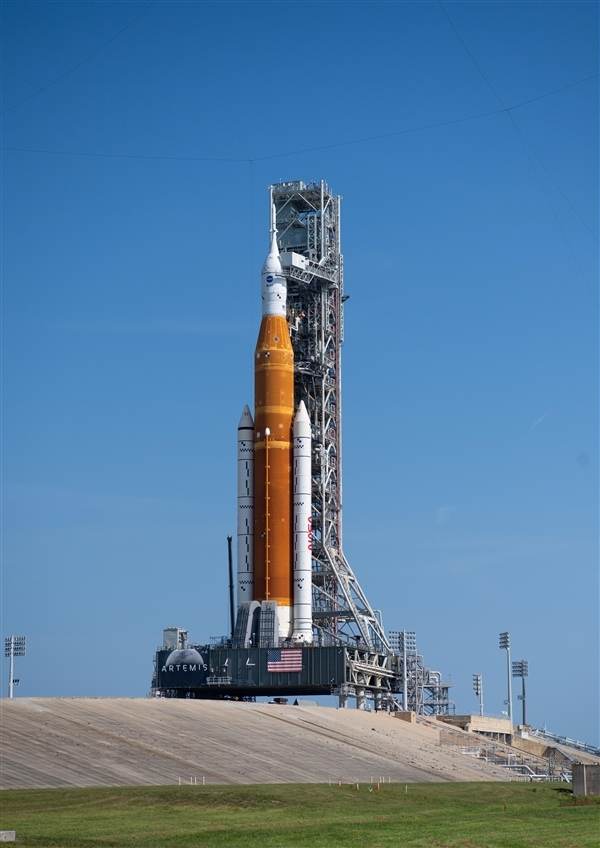
After more than a decade of development, years of delays and billions of dollars in budget overruns (the Artemis Program is reported to have cost 37 billion U.S. dollars), NASA planned to conduct the Artemis I mission on August 29, 2022. It marked the maiden launch of the Space Launch System (SLS), the most powerful rocket ever built, serving as a critical test for NASA’s crewed lunar return program scheduled for 2025.
On August 22, the SLS passed the Flight Readiness Review. As the most powerful rocket in history, it generates greater thrust than the Saturn V rocket, which carried astronauts to the Moon during the Apollo lunar missions. Stacked with the Orion spacecraft atop it, the entire structure stands nearly 100 meters tall.
It was reported that the SLS, together with the Orion spacecraft, would embark on the "Return to the Moon" journey on the launch day, providing vital data for evaluating the spacecraft’s performance in deep space. If all went as planned, the SLS would send Orion into an orbit just under 4,000 kilometers in altitude. The two craft would then separate; the rocket would fall back to Earth, while the Orion spacecraft would continue its voyage toward the Moon, remain in lunar orbit for six days, and eventually return to Earth, with the entire mission lasting 42 days.
One of the primary objectives of this flight is to test Orion’s heat shield. The shield will withstand temperatures close to 2,800 degrees Celsius when the spacecraft re-enters Earth’s atmosphere at a speed of 40,000 kilometers per hour. Though no astronauts will be aboard Orion for this mission, the spacecraft will carry sensor-equipped mannequins. The collected data is expected to help protect astronauts in future crewed spaceflights.
Following the conclusion of the Artemis I mission, NASA will launch Artemis II in 2024, which will send a team of astronauts on a lunar flyby before returning to Earth. In 2025, NASA will carry out Artemis III, the first crewed lunar landing mission since Apollo 17 in 1972. The mission will see a female astronaut walk on the lunar surface, making her the first woman in history to set foot on the Moon.